13 own-brand sausage lines
Coverage of the rollout said the updated code format appeared on 13 Tesco sausage lines, including core pork, chipolata, Cumberland, Lincolnshire, and sausage meat products.
Independent Retail Explainer
Tesco said in April 2026 that it had replaced traditional linear barcodes with QR codes powered by GS1 across its own-label core sausage range, moving a long-tested idea into live supermarket packaging.
This is an independent explainer and is not affiliated with Tesco, Tesco PLC, or GS1 UK.
What Changed
The headline is simple: Tesco is using QR codes powered by GS1 on an own-brand sausage range. The interesting part is what that lets Tesco and its suppliers do behind the scenes.
Coverage of the rollout said the updated code format appeared on 13 Tesco sausage lines, including core pork, chipolata, Cumberland, Lincolnshire, and sausage meat products.
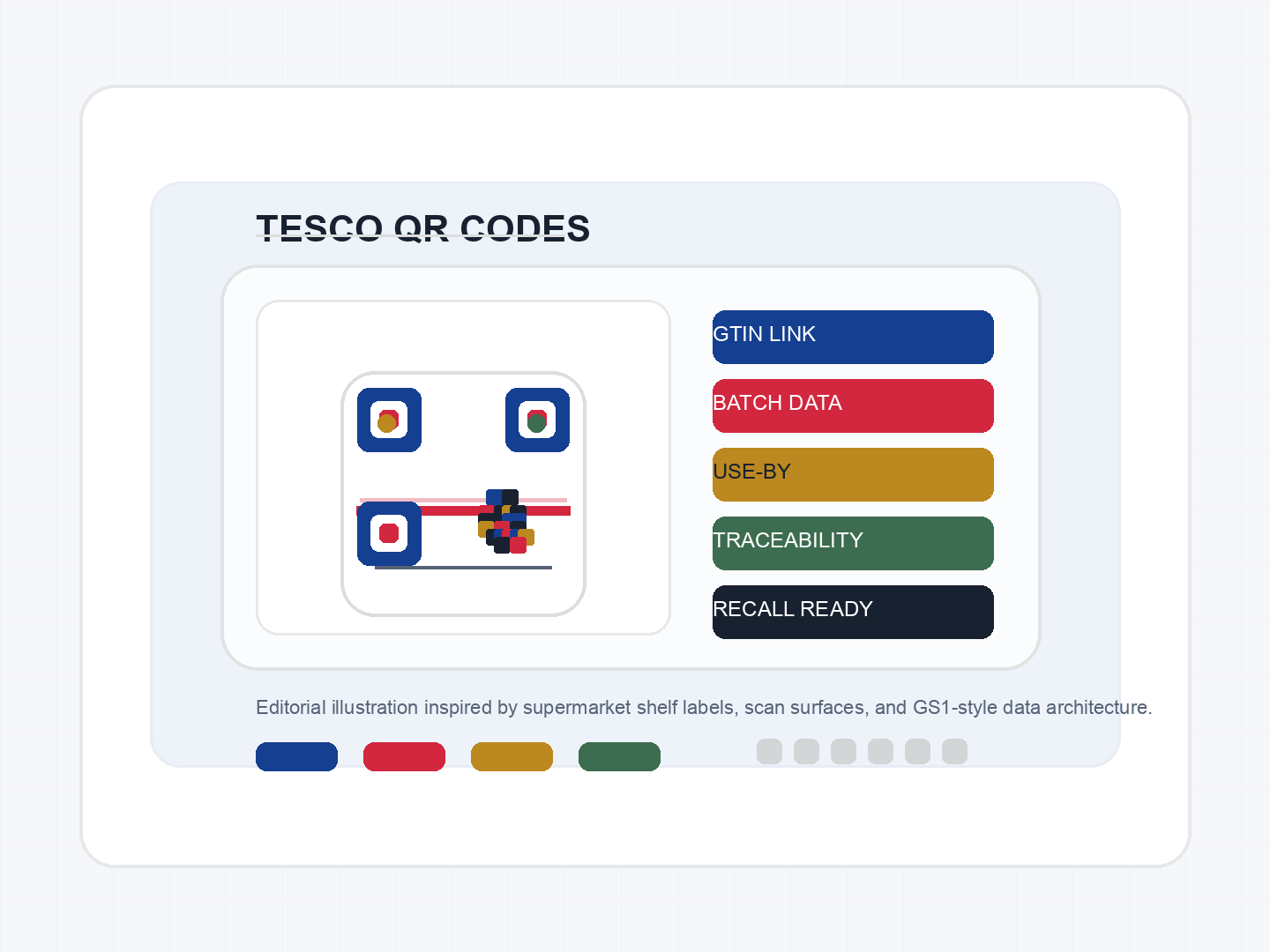
GS1 UK says the new codes are tied to standard product identifiers such as GTINs, so the packaging can still fit retail systems while linking to richer digital information.
Tesco’s earlier trials focused on capturing use-by dates and batch numbers more effectively, improving stock rotation and giving stores better visibility over what is on shelf.
GS1 UK says better batch-level identification can narrow recalls to affected products instead of forcing wider withdrawals across an entire line.
How It Works
Linear barcodes still do the basic retail job well. The case for QR codes is that packaging can carry more useful, more current, and more granular information without forcing a separate customer-facing code.
What It Means
The checkout experience is meant to stay familiar. GS1 UK described the change as largely invisible at the till, with the main visible difference being a scannable QR pattern on pack.
Over time the codes could expose clearer sourcing, nutrition, allergen, recycling, or use-by information on a phone, depending on how retailers and brands implement their landing pages.
The operational win is better product identity. That means sharper stock control, stronger traceability, more exact handling of affected batches, and less waste from overly broad product withdrawals.
The rollout also shows that next-generation barcode standards are moving from pilot programs into real UK grocery operations.
Timeline
Earlier GS1 UK reporting described Tesco pilots aimed at use-by dates, batch numbers, and food-waste reduction.
GS1 UK called Tesco the first UK supermarket to move an entire product range to QR codes powered by GS1.
GB News and other outlets framed the change as Tesco removing barcodes from sausage packs in a UK supermarket first.
FAQ
No. This website is an independent explainer. It is not affiliated with Tesco, Tesco PLC, or GS1 UK.
No. The April 2026 reporting was about a specific own-brand sausage rollout, not a chain-wide removal of every barcode across all Tesco products.
Not necessarily. Modern smartphone cameras usually read QR codes directly, although the exact landing experience depends on how Tesco or its partners configure the links.
GS1 is the standards body behind common retail identifiers. Its QR framework is meant to keep the code interoperable with existing retail systems instead of creating a separate custom format.
Examples mentioned across GS1 materials include richer sourcing, nutrition, allergen, sustainability, recycling, and product-specific updates.
Sources
This page is built from public reporting and standards-body material, not from Tesco product packaging or internal documents.
Consumer-facing coverage that framed the change as Tesco removing barcodes from its sausage range and pointed readers to the shopper-facing impact.
Read the GB News articlePrimary standards-source context on why Tesco adopted QR codes powered by GS1, how the codes fit retail operations, and what benefits the industry expects.
Read the GS1 UK post